
Planning guide
Car Wrap Cost Factors
Understand what changes a car wrap estimate, how material and labor layers differ, and how to compare wrap and paint quotes without a fake average.
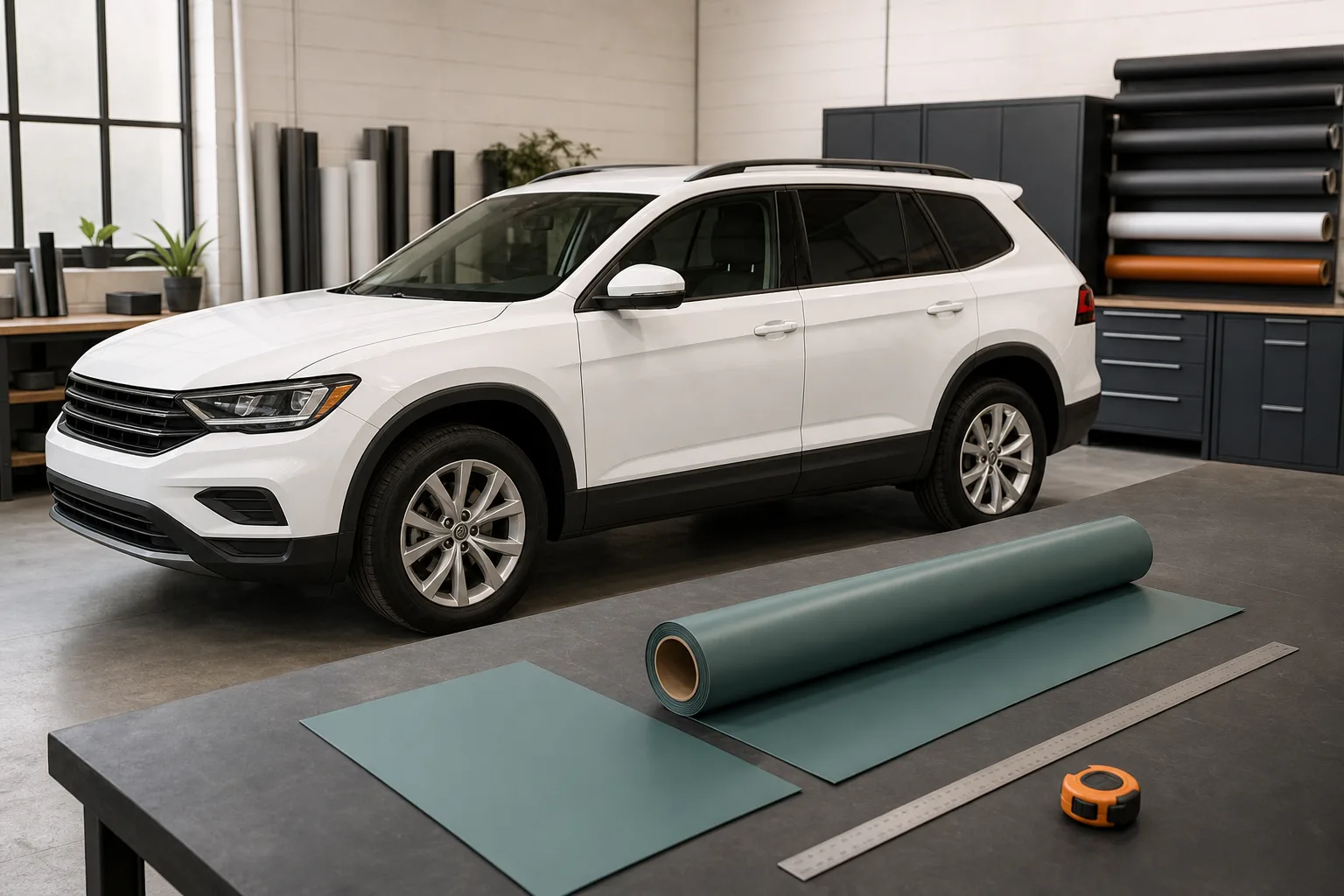
A credible answer to “how much does it cost to vinyl wrap a car?” starts with scope and condition, not a single national price. The material bill may be measurable, but a professional quote also reflects layout, design, preparation assessment, labor, overhead, risk, and local business conditions.
Material quantity is only the first layer
Roll length depends on vehicle geometry, roll width, edge allowance, panel arrangement, and job waste. A quote that includes more material than a simple area calculation may be accounting for wide panels, replacement risk, directional layout, or package rounding. Ask which quantity is purchased and which quantity is expected to remain.
The car wrap calculator keeps net area, handling allowance, packing loss, waste, and purchase quantity separate.
Scope must be named
A full exterior color change is not comparable with a roof, hood, accent, upper-body section, or commercial graphic. Clarify whether the scope includes openings, trim removal, mirrors, bumpers, spoilers, complex recesses, old-film removal, and design production. Two quotes can share the word “full” while describing different deliverables.
Geometry and condition affect labor
Overall size is not the only source of complexity. Deep transitions, many small pieces, difficult access, attached accessories, and existing surface defects can add assessment and labor. The calculator does not score vehicle complexity or condition, so its professional estimate section uses labor and design values that you enter directly.
How a professional estimate can be layered
A transparent model can show:
- direct material cost from the chosen purchase quantity;
- design or production cost, if applicable;
- labor hours multiplied by an entered rate;
- shop overhead applied to the chosen cost base;
- target gross margin using selling price = cost ÷ (1 − margin);
- optional tax applied last.
Overhead and gross margin are not synonyms. Overhead models business cost. Gross margin describes the share of the selling price left after the modeled cost. Adding a margin percentage as a simple markup produces a different result.
Wrap versus paint
Wrap and paint quotes should be compared as scopes, not only totals. Record what surface condition is assumed, which panels and edges are included, what disassembly or removal is included, the expected finish and durability statements, care limitations, warranty terms, downtime, and what happens if hidden condition changes the work.
The car paint cost factors guide uses a similar checklist for repainting. Neither option is automatically cheaper or more suitable for every vehicle.
Questions for a quote
- What exact surfaces and edges are included?
- Is design, old-material removal, trim work, or correction a separate line?
- Which material quantity and package assumption supports the price?
- What condition could change the estimate after inspection?
- Are taxes and fees included in the displayed total?
- Which promises are written into the quote or warranty?
Turn the calculation into a comparison brief
Save the measured scope, purchase quantity, pricing basis, design allowance, labor assumption, overhead basis, margin, and tax as separate lines. Give each provider the same scope description, then record where a quote adds, removes, or qualifies an item. This produces a useful comparison even when totals differ.
Do not force a quote into the calculator by hiding several unknowns in one input. If a provider combines labor, materials, or design, leave your uncertain fields clearly labeled and compare the written deliverable instead. The goal is to expose assumptions, not to reverse-engineer a business’s private pricing model.
Wrap & Paint Lab publishes no local-price average. Use the calculator to organize your assumptions, then compare them with written quotes from qualified providers.
Keep quantity and price evidence together
A material total is easier to review when it names the roll width, required length, purchased package, unit price, and leftover. A professional total is easier to review when it names the included design, preparation assessment, labor, overhead, margin, and tax layers. If either quote changes, update the affected input rather than applying an unexplained adjustment to the final number.
The roll size and waste guide explains the difference between physical need, layout loss, job waste, and package rounding.
Last reviewed: by the Wrap & Paint Lab editorial team. Review the calculation methodology.