
Planning guide
Car Paint Cost Factors
Understand whole-car repaint cost factors and compare written estimates without relying on an unsourced national price.
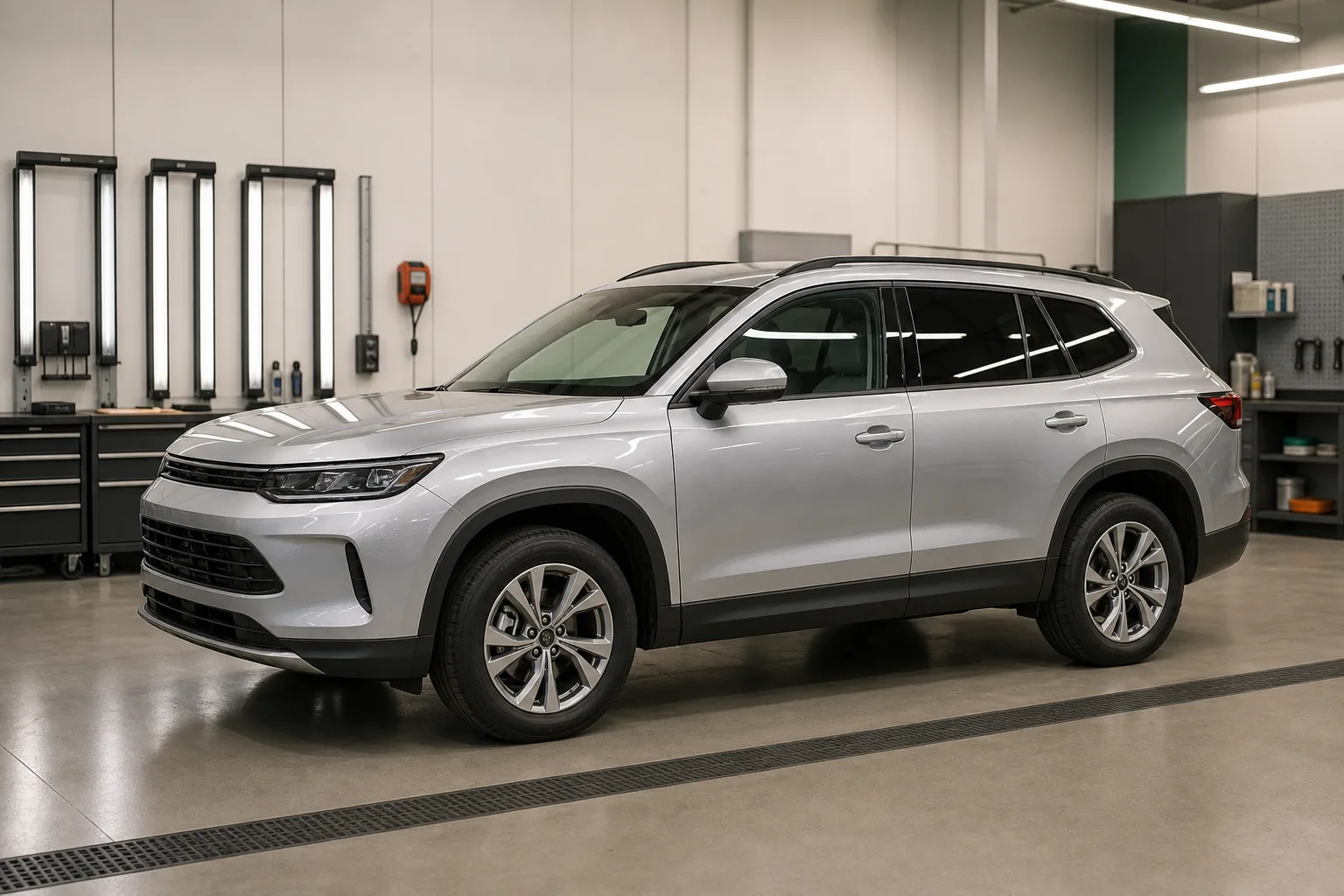
“How much does it cost to paint a car?” has no honest single answer without a vehicle, condition, scope, finish expectation, location, and written estimate. A whole-car price is the sum of many decisions that short price ranges tend to conceal.
Condition defines the starting line
An estimate may assume a sound surface, or it may account for old finish failure, corrosion, previous repair, damage, missing trim, contamination, or disassembly. Wrap & Paint Lab does not diagnose condition. Ask the estimator to identify which observations are included and which findings can trigger a change.
Scope defines the finish line
Clarify whether the estimate covers outer faces only or includes edges, openings, jambs, removed parts, replacement pieces, graphics, stripes, moldings, and reassembly. A color change and a same-color exterior refresh can describe different work even on the same vehicle.
Finish expectations matter too. A budget, preservation, commercial, enthusiast, or show-oriented objective may change inspection, correction, material, labor, and acceptance criteria. Use the provider’s written language rather than assuming a label has a universal definition.
Labor is more than vehicle size
Panel count and area help organize an estimate, but complexity, access, disassembly, condition, blend planning, masking boundaries, reassembly, and quality control can affect labor. The panel paint cost calculator lets you create explicit low, central, and high hours for repeatable rows; it intentionally does not supply a labor standard.
Material quantity and material cost are different
Coverage, coats, efficiency, waste, neutral ratios, package sizes, and package prices determine material cost. Primer, color/base, and clear need separate quantities. A quote may also include supporting materials that the quantity calculator does not represent.
Use the automotive paint calculator to understand stage arithmetic, then compare its boundaries with the written quote. It is not a product specification.
Business and local cost layers
Labor rate, materials, fixed fees, overhead, contingency, tax, facility requirements, warranty responsibility, and local operating costs can affect a total. Wrap & Paint Lab publishes no national or local price average because a broad range would hide major differences in scope, condition, materials, labor, and location. Use current written quotes for the same clearly defined work.
How to compare whole-car estimates
Create a table with the same rows for every quote:
| Question | What to record |
|---|---|
| Vehicle condition | Inspected findings, assumptions, and possible changes |
| Included scope | Panels, edges, openings, parts, disassembly, and reassembly |
| Finish expectation | Written quality and acceptance language |
| Labor | Included operations and whether hours or rate are disclosed |
| Materials | Named system or allowance, stages, and supporting materials |
| Business layers | Fees, overhead treatment, tax, deposit, and payment schedule |
| Risk | Warranty, exclusions, hidden-condition process, and schedule |
Do not choose solely by the smallest total when scopes differ. A higher quote may include work omitted elsewhere; a lower quote may be appropriate for a deliberately narrower goal.
Paint versus wrap
The car wrap cost guide offers a parallel comparison checklist. Wrap and paint solve overlapping appearance questions but have different condition, finish, maintenance, removal, and scope considerations. A qualified inspection is the right place to decide which applies.
This guide covers budgeting and quote comparison. It does not provide repair, chemical, surface-preparation, mixing, spraying, pressure, ventilation, protective-equipment, or disposal instructions.
Separate the quote from the planning model
A calculator scenario and a provider’s quote can be compared without forcing them into the same format. Keep the quote total as written. Use the planning model to identify scope, labor, material, fee, overhead, contingency, and tax assumptions that may explain a difference.
Do not assign missing hours or material charges merely to make the rows reconcile. Record the gap as an unresolved question. The auto paint quote comparison guide provides a consistent checklist for bundled and itemized offers.
This distinction protects both sides of the comparison. The calculator remains transparent about its assumptions, and the quote remains an offer with its own written scope and terms.
Last reviewed: by the Wrap & Paint Lab editorial team. Review the calculation methodology.